Your Digital Wallet: The Essential Spanish ID Cards
Moving to Spain means trading one set of daily essentials for another. Beyond your phone and keys, your most important items will be a collection of official cards and documents. While it can feel like you’re collecting a confusing set of acronyms, each one is a key that unlocks a different part of Spanish life—from filing taxes to proving your legal right to stay.
If you’re unsure where to begin, check out our comprehensive tax obligation strategy. Taxes in Spain Guide 2026.
This isn’t just bureaucracy; it’s your toolkit for building a secure and integrated life. Let’s break down the essential cards you’ll need, what they do, and the crucial distinctions between them.
1. The Foundation: Your Tax Number (NIE)
- What it is: The NIE (Número de Identidad de Extranjero) is your foreigner identification number. It’s not a card, but a critical number printed on a greenish A4 paper document (the Certificado de NIE or *Modelo EX-15*).
- Why it’s essential: This is your fiscal fingerprint. You’ll need it for almost every significant transaction, including:
- Opening a bank account
- Buying or renting a property
- Signing an employment contract
- Getting utilities (water, electricity, internet) set up
- Filing taxes
- When to get it: Ideally, you apply for this before you move or immediately upon arrival. It’s your very first step.
2. Your Physical ID: The Foreigner Identity Card (TIE)
- What it is: The TIE (Tarjeta de Identidad de Extranjero) is the physical, credit-card-sized photo ID for non-EU residents. If you’re from outside the EU and have a long-term visa, this is your proof of legal residency.
- Why it’s essential: This is what you carry in your wallet. Police or officials may ask to see it, and it’s required for many in-person procedures. It contains your photo, NIE number, and residency details.
- When to get it: You apply for this after you have entered Spain with your visa. You must get it within 30 days of your arrival.
💡 Key Distinction: DNI vs. TIE
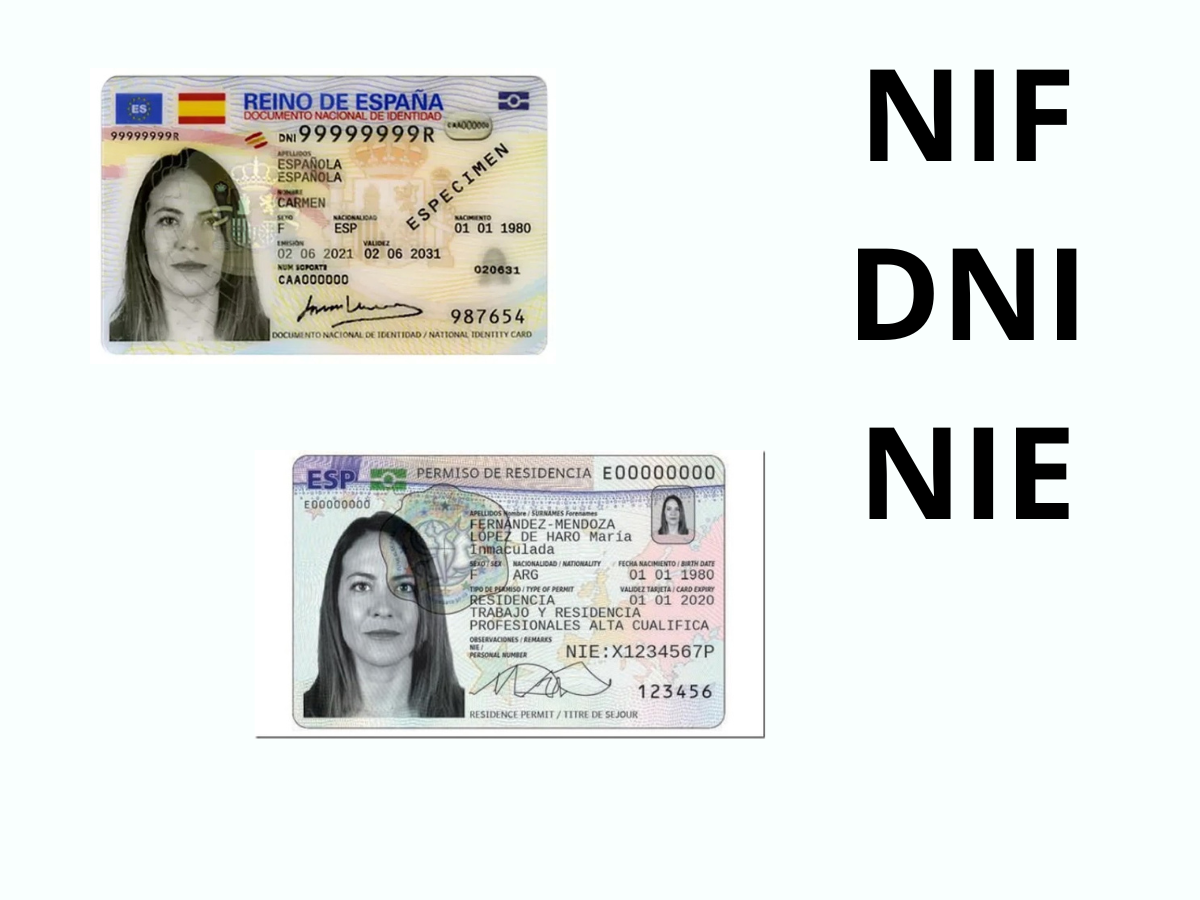
You’ll hear about the DNI (Documento Nacional de Identidad), which is the national ID for Spanish citizens. As a foreigner, your equivalent is the TIE. Think of the DNI as a Spaniard’s driver’s license for life, and the TIE as yours.
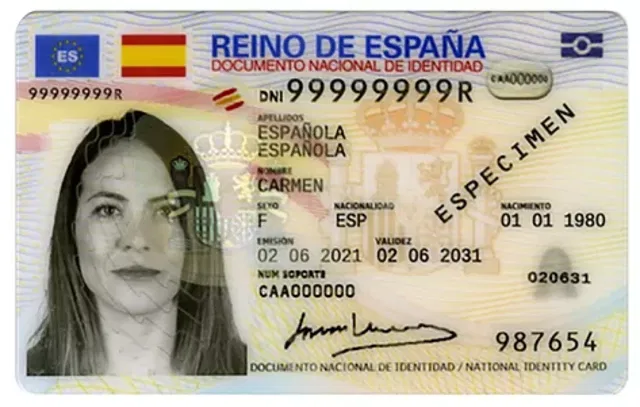
DNI
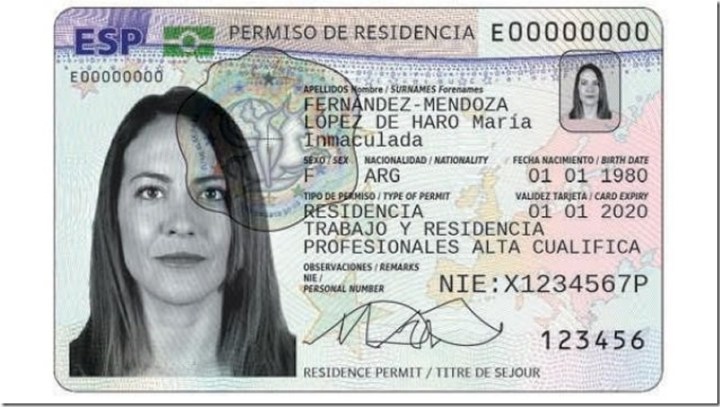
TIE
Understanding NIF – The Universal Tax ID
You’ll often see NIF (Número de Identificación Fiscal) on tax forms and invoices. This can be confusing, but the rule is simple:
- For a Spanish citizen, their NIF is the same number as their DNI.
- For you, as a foreign resident, your NIF is your NIE number.
Think of NIF as the function (Tax ID), while DNI and NIE are the sources of the number. You will use your NIE for all purposes where a NIF is required.
| Feature | NIE (Número de Identidad de Extranjero) | NIF (Número de Identificación Fiscal) |
| What It Is | Foreigner Identity Number | Fiscal (Tax) Identification Number |
| Purpose | To identify non-Spanish citizens in general administrative, legal, and economic dealings in Spain. It is required for residency, opening bank accounts, buying property, etc. | To identify anyone (Spanish or foreign, individual or company) for tax purposes and transactions with tax implications in Spain. |
| Format | A letter (X, Y, or Z), followed by 7 digits, followed by a control letter (e.g., X1234567-A). | For Spanish citizens, it is usually their DNI (ID number). For foreigners, it is typically their NIE. |
| Issuer | The National Police (Policía Nacional) or the Spanish Consulates abroad. | The Tax Agency (AEAT). |
| Required By | Any non-Spanish citizen who plans to reside, work, study, or engage in significant financial/legal transactions in Spain. | Anyone engaging in transactions with tax consequences (e.g., buying property, paying taxes, receiving income). |
Summary Checklist:
✅ NIE Certificate: Your tax number for all major financial and legal steps.
✅ TIE Card: Your physical photo ID as a non-EU resident.
Navigating this process is a rite of passage for every expat. Take it one card at a time, and you’ll soon have all the keys to a fully functional life in Spain.