
Updates Renta 2026 – What’s Changed?
Every year, the ‘rules of the game’ change slightly. For the 2026 campaign, we aren’t seeing a total overhaul, but there are four major practical shifts that could either save you money or change whether you even need to file. Let’s break down the 2026 updates for your 2025 tax year.
Keep visiting this page for more updates when the campaign is announced !
📅 The Final 2026 Calendar (Campaña Renta 2025)
- April 8: Online filing opens (Renta WEB and App).
- April 29: Appointment requests open for phone assistance (Plan “Le Llamamos”).
- May 6: Phone-based filing starts.
- May 29: Appointment requests open for in-person office visits.
- June 1: In-person filing starts at AEAT offices.
- June 25: Deadline for returns with a result “to pay” via direct debit (domiciliación).
- June 30: Final Deadline for all filings.
Unemployment Benefit & The Filing Threshold
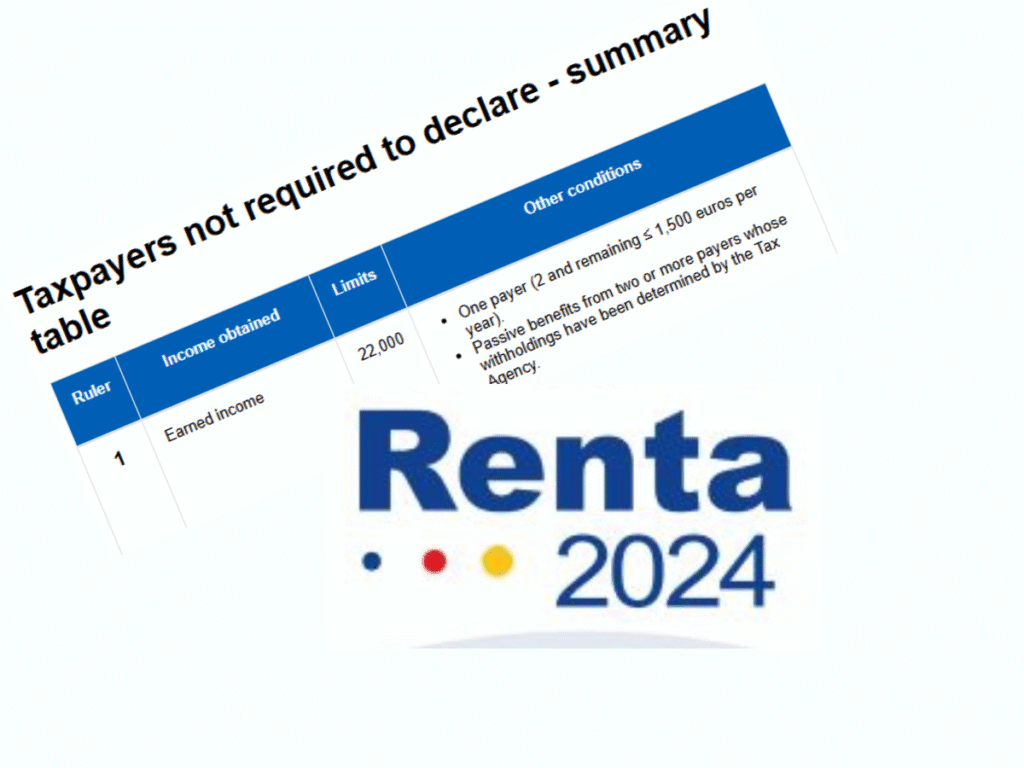
First, some great news for those on unemployment. In previous years, receiving even a small amount of Paro often forced you to file a return because it counted as a ‘second payer.’ Starting with this 2025 fiscal year, unemployment benefits no longer trigger an automatic obligation to file.
You now only need to file if you exceed the general income thresholds—usually €15,876 if you have multiple payers, though keep an eye on our website for the final confirmed limits!
One Payer: Still €22,000.
Multiple Payers: The limit has increased to €15,876 (up from €15,000).
- Note: This only applies if the second and subsequent payers combined paid you more than €1,500.
Unemployment (Paro): BIG CHANGE. Recipients of unemployment benefits are no longer automatically forced to file just for receiving the benefit. They now follow the general rules above.
SMI (Minimum Wage): People earning the minimum wage (€17.094/year or less, for 2026) are generally exempt.
New Relief for Low-Income Workers
There is a new State Deduction for Low-Income Workers. If you earned between roughly €14,000 and €20,000 in 2025, you might see a reduction of up to €340 in your tax bill. The system applies this automatically in Renta WEB, but make sure to check that your ‘Reduction for Employment Income’ (Reducción por rendimientos del trabajo) reflects your actual salary.
The “Low-Income” Deduction: A new deduction of up to €340 for those with employment income below €19,747.50. It scales down as you get closer to the limit.
The ‘Green’ Extensions (Sustainability)
Good news for the planet and your wallet: the ‘Green Deductions’ have been extended through December 31, 2026.
- Electric Vehicles: You can still deduct 15% of the cost of buying a new plug-in electric vehicle or installing a charging point (up to certain limits).
- Home Efficiency: If you did works to reduce your home’s heating or cooling demand by at least 7%, you can still claim a deduction. Keep those energy certificates—you’ll need the ‘before’ and ‘after’ versions to prove the improvement
Savings & Crypto Gains
For the investors: there is a slight ‘tax hike’ for the wealthy. The top bracket for savings income (interest, dividends, and capital gains like Crypto or Stocks) has increased. If your savings income exceeded €300,000, that excess is now taxed at 30% (up from 28%). For most of us, the rates remain at 19% to 23%, but it’s a sign that Hacienda is watching capital gains closely
Savings Tax (The Wealthy): A new top bracket. If capital gains (stocks, crypto, etc.) exceed €300,000, the tax rate is now 30%.
DANA & Emergency Relief
Finally, a crucial update regarding disaster relief. If you received public aid for personal damages due to forest fires or the DANA floods in 2025, that money is 100% exempt from IRPF. You don’t have to pay a cent of tax on those specific emergency grants.
DANA Exemptions: Official confirmation that public aid for those affected by the 2025 DANA floods is tax-exempt.
Official Resources: For the most up-to-date tax information, official calendars, and technical details, you can visit the Agencia Tributaria website here.
Regional Deductions & Foral Systems
Did you know that living on one side of a regional border can change your tax bill by hundreds, or even thousands, of euros? Spain has two systems: the Common Regime (most of Spain) and the Foral Systems (Basque Country and Navarra). Today, we’re looking at the regional ‘gifts’ and traps you need to know for your 2026 filing.
The “Big Three” Regions (Valencia, Andalusia, Madrid)
In the Common Regime, your autonomous community sets its own deductions. For the 2026 campaign, here are the heavy hitters:
- Comunidad Valenciana: They continue to lead with ‘Social Deductions.’ You can deduct expenses for dentists, opticians, and even gym memberships (up to certain income limits). If you live here, don’t throw away those invoices!
- Andalucía & Madrid: Both regions have heavily reduced their tax brackets to fight inflation. In Madrid, look out for the ‘Under 35’ rent deduction, which is one of the highest in Spain. In Andalusia, there are significant bonuses for large families and those living in municipalities at risk of depopulation
The Foral Systems (Basque Country & Navarra)
Now, let’s talk about the North. The Basque Country (Bizkaia, Gipuzkoa, Araba) and Navarra have their own tax laws and even their own websites—you don’t use the AEAT website here!
- The ‘Mínimo Exento’: For 2026, the threshold to even start paying tax in the Basque Country is generally higher than the rest of Spain (around €15,000 for a single payer).
- Housing is King: While the rest of Spain removed the deduction for buying a home years ago, the Basque Country and Navarra still allow you to deduct mortgage payments for your primary residence. This is a massive saving that ‘Common’ residents simply don’t get.
Update: Regional Star Deductions
- Andalucía (New!): 15% deduction for gym memberships and veterinary/pet expenses (max €100). Also a new €100 flat deduction for Celiacs.
- Valencia: Continues its 30% deduction for dentists and opticians (max €150) and 30% for gyms (max €150). Income limit: €32k individual / €48k joint.
- Madrid: High rent deduction for under-35s (up to €1,200) and specific credits for families with children in private schooling.
- Basque Country: Remember, they still have the 18% mortgage deduction—one of the last places in Spain to keep it.
Remote Work & Moving
A new update for 2026: many regions like Castilla y León and Galicia have introduced ‘Resettlement’ deductions. If you moved there in 2025 for work—especially if you work remotely—you could claim a deduction for your moving expenses or even a flat-rate credit just for becoming a resident.
How to check your specific region
How do you find yours? In Renta WEB, go to the ‘Deducciones Autonómicas’ section. It will automatically show the ones for your tax residence. Warning: The system doesn’t always know if you have a large family or if you paid for a private tutor—you have to check those boxes manually!
Check the Box numbers: specific box for “Regional Deductions” usually starts around Box 0850.
Confirm the App: you can use the Agencia Tributaria App to “one-click” confirm their Borrador if nothing has changed.
The “Simulador”: The Renta Web Open (Simulator) is usually live a few weeks before April 8th, so people can play with it now.